


Cut Your Spend on Bending Metal Parts
Trending Topic

In the world of metal fabrication, weight often dictates workflow. Traditionally, any part over 50 lbs. has been deemed a two-person job on a press brake—ensuring safe handling and precise positioning for each bend. While this approach prioritizes safety, it also doubles the labor cost for those parts.
Manufacturing Skilled Labor
The manufacturing sector is currently facing significant labor challenges. According to the National Assn. of Manufacturers, As of October 2024, there were 465,000 manufacturing job openings in the United States, indicating a substantial demand for skilled labor.
Additionally, unit labor costs in the manufacturing sector have been rising. In the third quarter of 2024, unit labor costs increased by 1.7% from the same quarter a year ago, reflecting higher expenses for manufacturers, according to the Bureau of Labor Statistics
By adopting automation solutions like Ryerson's press brake machine, manufacturers can mitigate the impact of labor shortages and rising costs, enhancing both efficiency and profitability.
But what if you could flip the script? Rising labor costs and increasing demand for efficiency call for a new way forward. Imagine eliminating the need for a second operator, all while achieving better consistency and accuracy with every part. The solution might just redefine what’s possible in bending and forming. Curious?
Let’s dive in.
Consider this scenario :You need to form 65-lb. parts using your press brake machine, which operates at a cost of $150 per hour. Let's examine the cost per part using two methods:

Labor-Driven Scenario:
- Number of laborers: 2
- Parts produced per hour: 10
- Cost to form per part: $30
Fully Automated Scenario:
- Number of laborers: 0
- Parts produced per hour: 10
- Cost to form per part: $15
By transitioning to a fully automated press brake system, you can reduce the cost per part by 50%.
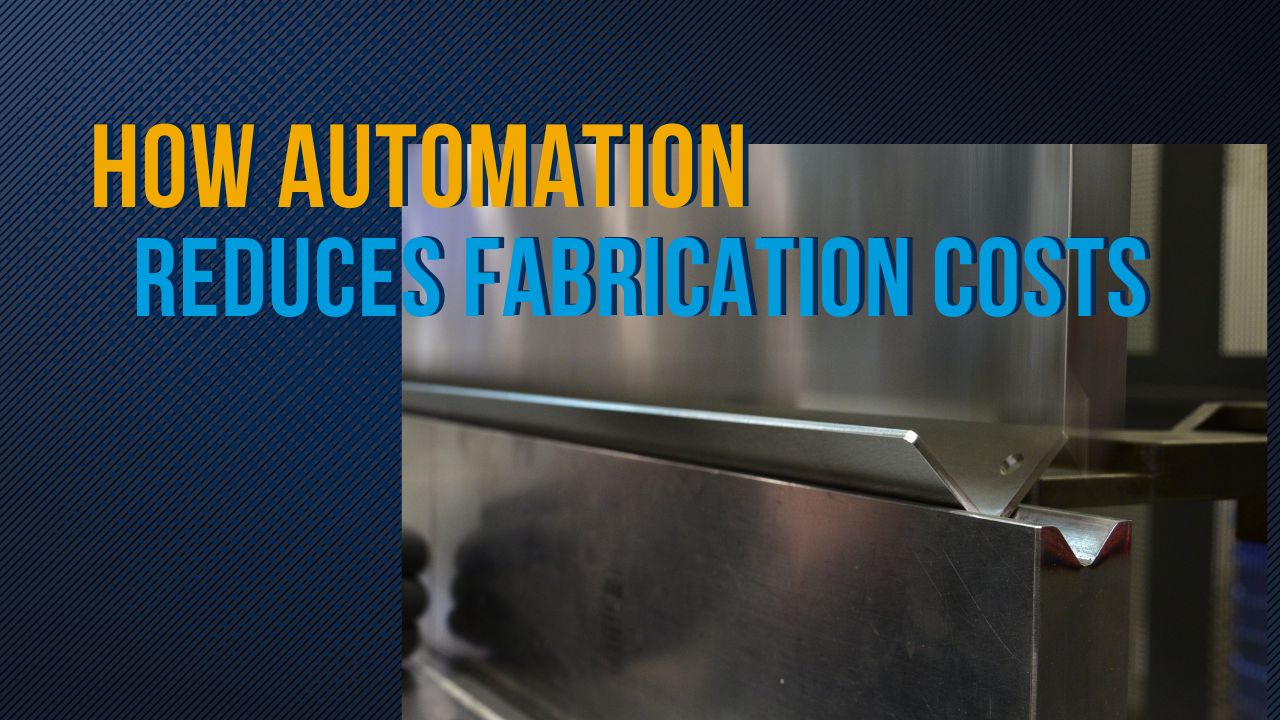
Ryerson offers a fully automated press brake machine capable of handling parts up to 250 lbs. Robotics manage each step of the process—from picking to forming, stacking, and packaging—eliminating the need for manual labor in these tasks.
Ready to Cut Your Spend on Metal Bend?
©2026 Ryerson Holding Corporation. All Rights Reserved.